
2026-08-29 · Javier Soto
Signs of Tree Root Intrusion in Mesa Sewer Lines
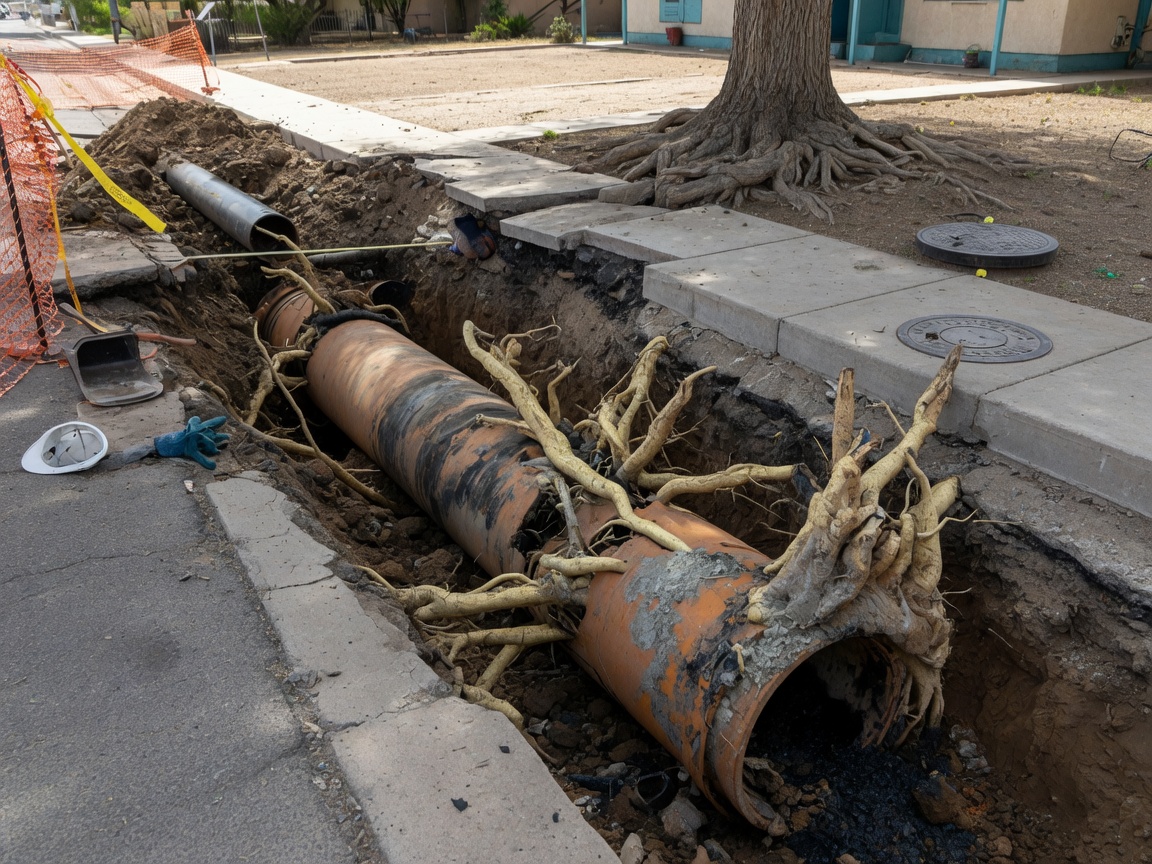
Tree root intrusion in Mesa sewer lines typically first appears as recurring slow drains in multiple fixtures or gurgling sounds from toilets, especially during the peak heat months when roots aggressively chase underground water sources in Maricopa County.
Why Roots Invade Sewer Pipes in Mesa's Desert Climate
Mesa's hot desert climate with extreme summer heat drives tree roots to seek steady moisture, and sewer lines provide exactly that. In neighborhoods such as Red Mountain and Superstition Springs, mature trees near homes push roots toward pipe joints in search of water, particularly when surface soil dries out quickly. Older housing stock in Downtown Mesa often features clay or cast-iron lines with mortar joints that crack over time, giving roots easy entry points. The flat terrain around Riverview Park and the Superstition Mountains means poor natural drainage, so roots travel farther laterally to reach these pipes. Homeowners near Phoenix and Tempe report similar patterns because the same heat and soil conditions exist across the valley. Once roots enter, they expand with each irrigation cycle from nearby landscaping, eventually restricting flow and causing backups during monsoon events.
Early Warning Signs Homeowners Notice First
Slow draining bathtubs and showers that worsen after heavy watering of lawns signal root growth inside lines. Gurgling noises from floor drains or toilets when water runs elsewhere indicate partial blockages forming along the main line. Foul odors rising from cleanouts or sinks often accompany these issues, especially in summer when bacterial activity increases in the restricted pipe. In areas like Alta Mesa and Dobson Ranch, residents also see repeated clogs in the same fixture within weeks, pointing to root masses rather than simple grease buildup. These signs appear gradually, giving time for inspection before a full collapse occurs. Checking for wet spots in the yard along the sewer path can reveal where roots have caused leaks, a common sight near older homes bordering the Superstition Foothills.
How Local Soil and Housing Age Accelerate the Problem
Maricopa County's alkaline, compacted soils shift with temperature swings, stressing pipe joints and creating openings roots exploit. Homes built before the 1980s in Sunland Village and Leisure World commonly have 4-inch clay laterals that roots penetrate within 8–12 years of planting nearby trees. The extreme heat accelerates root growth rates compared to cooler regions, so a small intrusion can reach 2–3 inches in diameter inside a season. Near Eastmark and Las Sendas, newer developments still face risks when landscape trees are placed too close to sewer easements. Soil expansion during rare heavy rains further widens existing cracks, allowing more roots to enter. Regular camera inspections catch these early stages before excavation becomes necessary.
Recommended Next Steps After Spotting Signs
Schedule a sewer camera inspection to confirm root location and pipe condition without guesswork. If roots are confirmed, sewer root removal clears the immediate blockage while preserving the line where possible. For recurring issues in Red Mountain Ranch or Parkwood Ranch, consider trenchless sewer repair options that minimize yard disruption. Review the article How Monsoon Rains Affect Sewer Lines in Mesa Homes to understand seasonal timing. Homeowners should also examine Cost Factors for Sewer Line Work in Mesa Arizona before committing to replacement. Addressing intrusion early prevents backups that affect multiple homes on shared laterals.
Preventing Future Root Intrusion in Mesa Yards
Plant trees at least 20 feet from sewer lines and choose species with less aggressive root systems when landscaping near older properties in Mulberry or Crismon Creek. Install root barriers during new construction or major landscape work to redirect growth away from pipes. Annual hydro jetting removes early root hairs before they thicken. In Superstition Springs and Fountain of the Sun, homeowners who combine these steps with periodic camera checks report fewer emergency calls during summer peaks. Consistent maintenance protects the line for decades even in the demanding local climate.